

We’ve all been there: Sitting in a crowded waiting room, scrolling on our social media to distract us from the person coughing next to us, wondering if they’re contagious. But what if that waiting room could be reimagined? What if it could be efficient, private, and entirely digital?
This is where the virtual waiting room comes in. This solution can upgrade the entire patient journey. The right telemedicine waiting room solution streamlines check-ins, dramatically reduces the burden on your front desk staff, and keeps mid-sized practices running like well-oiled machines.
In this article, we’ll explore how you can modernize your patient engagement strategy using tools like a virtual waiting room and how moving your queue online can lead to happier patients and a more efficient practice.
Key Takeaways
- Virtual waiting rooms replace outdated, disorganized physical lobbies with streamlined digital workflows.
- Automating intake forms and check-ins frees your staff to focus on patient care rather than paperwork.
- Patients enjoy privacy and convenience, waiting in their cars or at home rather than in a crowded room.
- Digital solutions grow with your practice, offering a cost-effective way to manage volume.
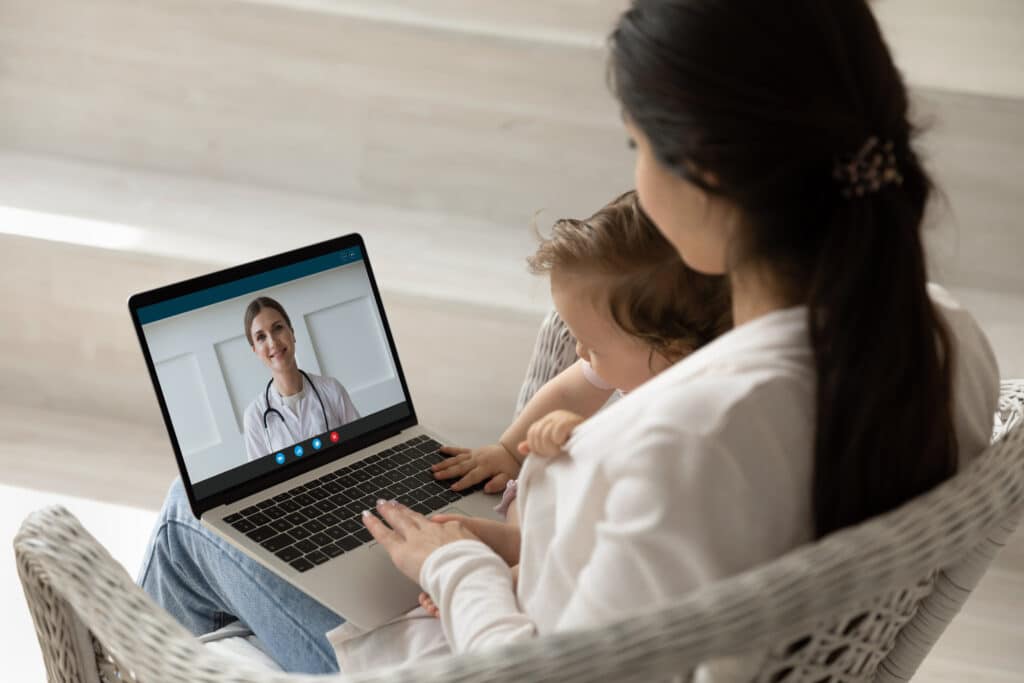
The Evolution of Patient Engagement
Allegheny General Hospital’s Emergency Department — the real-life inspiration for HBO’s drama The Pitt—has the longest average patient wait time in Pittsburgh at four hours. This may be a more extreme example of how long waiting room times can get, but what about the average medical practice?
- According to a survey of medical practices, the average wait time just to see a physician is 31 days.
- And once the patient finally gets an appointment, they wait some more. Nationally, the average time spent in a doctor’s waiting room is around 18 minutes.
That doesn’t include the time spent filling out paperwork or waiting in the exam room before the provider actually arrives.
What do these stats prove? In short, the traditional in-person waiting room is often backed up, and this model has several limitations. It lacks privacy and can generate anxiety, especially when wait times are unpredictable. And from an operational standpoint, it is incredibly manual and prone to errors.
Luckily, virtual waiting rooms can help you tackle these challenges. This concept takes the necessary steps of the “lobby experience”—checking in, verifying info, waiting for the provider—and moves them to a secure digital environment. By using a virtual healthcare lobby, practices can optimize patient flow, reduce bottlenecks, and better utilize provider time.
According to one review, virtual waiting rooms in medical practices boost patient satisfaction by:
- Reducing infection risk
- Saving time through remote check-ins and private waiting
- Improving clinic efficiency
- Managing patient flow better with real-time updates
- Increasing privacy for sensitive topics
- Lower patient anxiety
RELATED CONTENT: Patient-Centered Care: How Updox’s Patient Engagement Tools Support Your Practice’s Mission
Streamlining the Check-In Process
Efficiency starts the moment a patient decides it’s time for their appointment. With the HIPAA-compliant Updox Telehealth platform, the virtual waiting room becomes an automated intake engine.
When you use the platform’s robust virtual waiting room software, the check-in process becomes seamless, as it enables triage workflows that mimic an in-person visit. This patient virtual check-in system alerts your staff immediately when the patient arrives and is ready.
The result? Drastically reduced wait times. Paperwork, co-pays, and verification can be completed by the virtual triage team before the provider joins the session, making the flow of patients from “arrival” to “exam room” much faster. It eliminates the bottleneck at the front desk, ensuring that the provider sees the patient sooner.
After the session, providers can also send the patient back to the waiting room for the post-appointment team to complete follow-up tasks like scheduling their next appointment and to address any billing inquiries.

Enhancing the Patient Experience
Patient satisfaction is often determined by how much they feel their time is valued. An online waiting room for patients respects their time in a way that physical waiting rooms cannot match.
First, it allows for tailored pre-visit communications. Instead of a generic “sign here,” patients can receive tailored instructions or reminders directly to their devices. It feels personal and attentive.
Secondly, a digital healthcare waiting room can be more than just a blank screen. While patients wait, you can provide them with access to relevant educational materials or health resources. If a patient is coming in for a specific chronic condition, such as diabetes, they could review blood sugar management tips while in the virtual queue. This transforms “dead time” into productive, health-focused time.
Reducing Administrative Workload
Stress among administrative staff is a real challenge for medical practices. In one report, nearly half of healthcare workers (46%) reported feeling burned out often. A remote patient waiting room can be a valuable resource for your team.
One of the biggest time-sinks for front desk staff is manual data entry. Patients fill out paper forms, and staff must enter that information into the electronic health record (EHR). This double-handling is inefficient and invites errors.
As the Updox telehealth platform seamlessly integrates with most EHR systems, when patients fill out digital forms, the information is automatically imported into the system.
Virtual waiting rooms can also help streamline scheduling by allowing remote check-in while also facilitating easier rescheduling and communication via text/apps for updates or cancellations, leading to fewer no-shows.
This tool also manages patient flow by digitally queuing them, sending real-time alerts when it’s time to be seen, making the whole process more efficient and patient centric.
RELATED CONTENT: Telehealth After 2025: Preparing Your Practice for the Next Era of Care

Benefits for Mid-Sized Medical Practices
For large hospital systems, technology is often just a line item in the budget. But for mid-sized practices, every investment needs to prove its worth. A telehealth waiting room platform is a highly cost-effective solution for managing patient volume. Here’s why:
- You don’t need to lease more office space to accommodate a larger waiting room. Leasing more medical office space involves lofty costs, including location (e.g., Boston averages $60-$80+/sq ft/yr), lease terms, and build-out expenses.
- You don’t need to hire extra admin just to handle the morning rush (the average Medical Assistant’s salary is $44,200/year).
- The software handles the volume for you.
Furthermore, this solution offers scalability and profitability. You can boost revenue by seeing more patients more often with virtual visits. And as your practice grows and adds new providers, the virtual waiting room software scales to meet the demand without requiring a renovation of your physical office space.
Building a Future-Proof Patient Engagement Strategy
Healthcare is moving toward a hybrid model that blends digital convenience with clinical excellence. Practices that insist on sticking to the “clipboard and pen” method risk falling behind. Patients now expect the same level of digital convenience from their doctor that they get from their bank or food delivery service.
Adopting a telemedicine waiting room solution isn’t just a fix for today’s efficiency problems; it is a strategy for future-proofing your practice. It builds a flexible infrastructure that can withstand pandemics, flu seasons, and staff shortages.
By integrating a virtual waiting room, you are telling your patients that you value their time, privacy, and health.
Ready to say goodbye to the clipboard? Contact Updox today to discover how to achieve long-term patient engagement success with an advanced virtual waiting room solution!
FAQs: Virtual Waiting Room and Patient Engagement
Does a virtual waiting room replace my front desk staff?
No, it empowers them. It removes low-level manual tasks (such as data entry and clipboard management) so they can focus on complex patient needs and phone calls.
Is a digital healthcare waiting room secure?
Yes. Reputable platforms like Updox are HIPAA-compliant, ensuring that all patient data and communications remain private and secure, unlike a paper sign-in sheet at a front desk.
Can this be used for in-person visits, or just telehealth?
It is excellent for both! You can use a patient virtual check-in system for patients arriving at your physical office (allowing them to wait in their cars) just as effectively as for remote telehealth visits.